0

How little do we know about Farming !

It comes as a surprise to me to know that we know so little about farming in spite of immense advancements in science and technology.

With absolutely no idea of farming, I started farming. All I knew was – we put a seed, it sprouts and if taken care of, it turns into a tree. It was not that simple. A lot of things need to be considered, I learnt as I experienced farming. The impact of soil, stars, time, rains, water, species, weather, location – all needs to be factored in.

As my hunger to learn more and more about farming increased, the more I found myself in grey zones. There were no authoritative texts on even the most fundamental questions of farming. For instance,

Why do we till ? Is it necessary ?  If no, how do we go about it. If yes, how much and how to do it ?

I Googled, I read books, I watched documentaries, I talked to local farmers and to old men of the villages. None of them could give a satisfactory answer. The old man, came closest to my satisfaction.

Why and how do pests/insects come up during a crop cycle ?

There is ample information on both chemical and organic treatments of pests and disease but no good reading on why do pests come up in the first place ? Vague answers do exists but they all have their exceptions right in the garden of the answerer.

Of-course we know a lot about a lot of things in farming but that information overload is perhaps what keeps us away from real questions. We might have technology to grow exotic varieties of rice, to grow crops without soil, to transfer a 100 year old tree. Yet, we know so little about what really happens when we grow paddy, what is life web in the soil and how an old tree communicates to cosmic energy !

There is need of sincere enquiry into farming and it’s practices. Perhaps each farmer has to carry out his/her own individual research. May be, we as community can find answers to some of the most important questions. For finding answers, or even simply pursuing fundamental questions such as these will open up a world before us.
3

Embracing Agnihotra from Vedas

According to Vedas and Hindu Mythology, Yagya and Havan were two very essential rituals for every aspect of life. Marriage, Death Ceremony, Celebrations, Festival, Farming activities, Spiritual Ceremonies – they all revolved around some form of Yagya or Havan. According to Vedas, Yagya and Havan are vedic rituals to communicate with cosmic energy, to send messages to Gods. It usually involves a fire cermony where offerings are made to the fire. God is believed to have “Agnimukh” i.e. Fire as his mouth, so we make offerings to fire with the faith that it’ll go to God.

While a Yagya is more elaborate ritual, Havan can be a very simple and small ritual. Yagyas may go on for days, months, year and may involve various other aspects like Satsang, Dana, Bhoj etc..While Havans are usually simple. Further it can be said that Havans are primarily for personal and worldly benefits, a Yagya is often for world’s welfare.

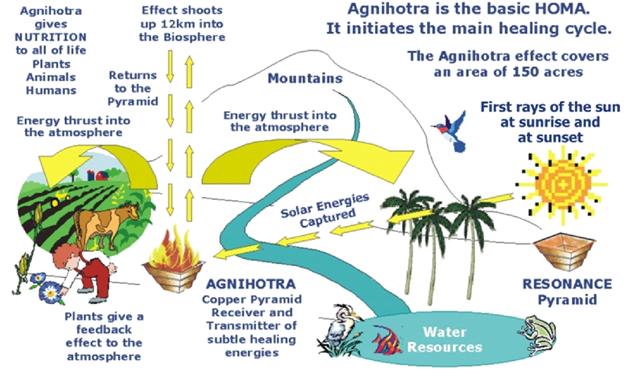
Agnihotra is a very simple form of Havan prescribed to be done right at Sunrise and Sunset. The offering of Desi Cow’s ghee and unbroken rice (Akshat) is made to fire of cow dung cakes. It is suggested to do it in a pyramid shape container called Dasangula patra. It is believed to purify the environment, attract positive cosmic energy and ensure general well-being of all living beings in its vicinity.

Courtesy Homafarming.org

Courtesy Homatherapy.org

Personally, I had heard of this in my childhood when my mother used to perform it.I had vague memories of the calmness that I used to enjoy and the fun of racing with time of sunset and sunrise.

Recently, me and Priyamvada decided to start Agnihotra again at the farm. While there is an entire farming technique and philosophy called “Homafarming” that goes along with Agnihotra, – we were more interested in only Agnihotra. We were simply interested in starting something sacred together.

So, we started Agnihotra few months ago. We are in love with it now. The calm it induces, the fun of it, the simplicity of it, the mystery of it – we like it all. Whether it is because of Agnihotra or something else, that debate is quite meaningless for us.

We feel good performing Agnihotra and hence also believe that our crops, plants and fellow living beings will also benefit. We use it’s ash in various ways in our everyday life and natural farming. I think we have found a lovely companion for our natural farming and spiritual journey. It certainly introduces positivity and peacefulness in our lives and we would certainly recommend it.

Agnihotra need not be a life-long process and that’s the beauty of it. It’s really like a friend. No hard rigid rules, no punishments -it only shared whatever lovely things it has to offer. It’s just like a sacred moment of prayer where we get an opportunity to be grateful to nature’s elements, to earth, to sun, to soil, to God for everything that they bestow us with.

(For more details, please web-search “Agnihotra” or “Homafarming”.)

0

Unnatural is a fake word

A question keeps growing the deeper one understand nature – what is nature , natural and thus what is unnatural ?

If everything that exists is part of nature, is born out of nature – what then is unnatural ?

Is polythene unnatural ? How do we decide ?

At a deeper level nothing appears unnatural and “unnatural” becomes a fake word.

Then more questions come up – if we accept this hypothesis. – What’s wrong in cutting a tree ?  What’s wrong with extracting water from tube-wells? What’s wrong with GM food ?

GM food might not be good for us, just as eating stones is not. But, is genetic modification unnatural ? If man is part of nature, can anything done by us be not a part of nature and thus – unnatural ?

If monkey’s eating a banana and throwing a banana peel is natural, how can man’s experiments to create something new  be unnatural ?

Similarly cutting a tree appears definitely to be something sinful and unnatural but how about wind or rains uprooting a tree or an elephant or cow stamping plants ?

Where do we draw the line ? Does man’s selfishness and desires make things unnatural ?

What is unnatural and what is natural ?

These questions needs some thoughts….

0

Natural Soil Nourishment

Cows fertilizing the field

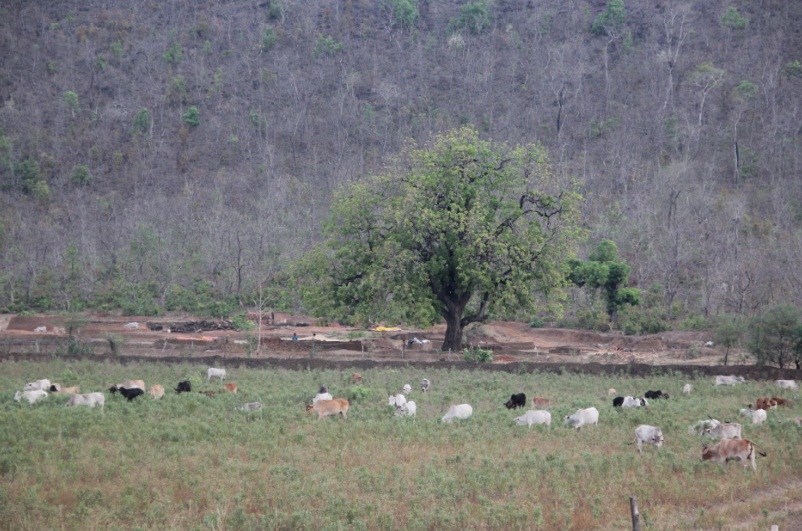
Cows Grazing Freely on the field , dunging and urinating

cow_graze2

Everyday some 40-50 cows from nearby villages cross the farm spending an hour or so grazing and fertilizing the Tuar field

Cow dung and urine (and the preparations derived from these two)  are  excellent for soil improvement. Infact they are the centre of most organic and natural farming methods like Bhaskar Save’s,  Natueco , Deshpande method, Palekar Method etc.

How do we actually inculcate this if the fields extend beyond few acres ? Smaller farms, hence have been more manageable and sustainable.  However, at the Madman’s farm – we had no choice but to take care of entire 25 acres of farm. So, in spite of various challenges that a big farm brings – we slowly began the process.

To improve soil, green manure appeared far easier a method than hosting numerous cows. Lack of labor, skills, management and time are various challenges that affect our decision.

However, we again happen to hit – what appears so far as jackpot. We did not plough the fields after harvesting tuar dal (Pigeon pea) because we wanted to see if the crop survives till next season so that we can avoid tilling and increase organic matter,nitrogen in soil. We also couldn’t fence our entire campus due to ethical dilemmas (like Is it right to cut off your farm from rest of the fields ? or How fencing will reduce playgrounds for wild animals from nearby jungle! ).

What happened as the summer began, people of nearby villages started loosening up their animals who were attracted to the greenery of tuar fields. So, everyday a lot of cows simply walk into the fields and graze on remaining tuar plants and some other grasses here and there. This is triple plus. One, cows get fodder, which is very scarce in summer here. Second, cows urinate and dung in the fields which is a natural manuring and soil improvement process. Third, the tuar plants are being pruned (unless heavily eaten which rarely happens) which improves it’s growth. Traditional wisdom also says that plants eaten by cows fall less into the attack of pests and disease. Ofcourse they end up damaging some plants but overall it appears to be have a net positive impact on the fields.

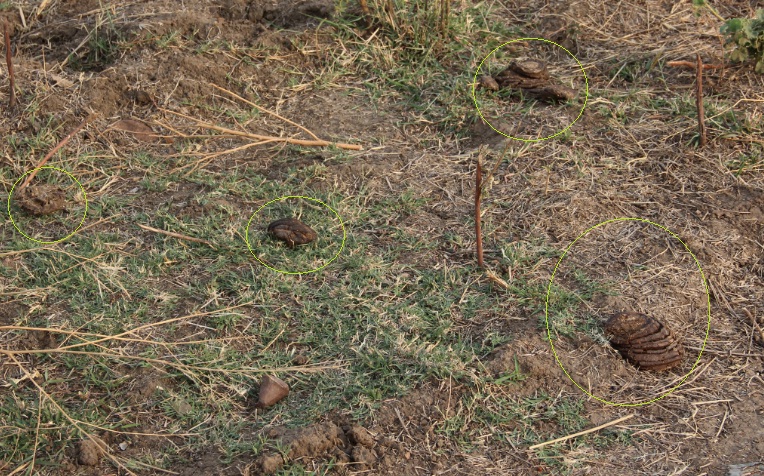
Natural cow dunging

There is lot of dung in the farm..dense at some places, spare at others.

Now, we are planning to also make some arrangements for cows to drink water so they can also drink water and rest at the farm.

While overgrazing remains a concern but we feel happy to share our fields and crop with cows. We feel happy if they can get some green food, some water because of our efforts and nourish the soil in the process.  We feel happy when they visit us and rest in fields, reminding us – that these are not “our personal” fields but a piece of land belonging to mother nature.

0

Repeating the mistake of Green Revolution – New Organic Revolution

A common sentiment in air these days is that the green revolution has turned out more a bane than a boon. The failure of current agriculture and increase in use of pesticides and chemicals by farmers is largely attributed to the green revolution.

Recently at the 5th National Organic convention, a similar sentiment ruled. A book was distributed to all delegates on this topic of “Green Revolution: Was it really green?”.

Is it really so that a villain named “Green Revolution” is responsible for all the problems ? Or Are we shifting the blame from our farmers and leaders to an imaginary phenomenon?

A lot of thrust is being given now to “New Organic Revolution”. Organic farming is being promoted by all kinds of activists and leaders. It is seen as a panacea for most of our issues related to food, agriculture, health and economy.

It’ll make sense, to pause for a while and make sure that we are not repeating the mistake. To make sure that 40 years hence, people are not distributing books on “Organic Revolution: Was it really Organic? ”

Frankly, we are not addressing the key issues in agriculture. What is the core problem? Is it really excessive use of chemicals? or Is it the greed behind it ?

Human greed and Human Selfishness are key reasons for failure of green revolution and could again be the key reason for failure of Organic revolution.

We are simply replacing chemical pesticides with Organic Pesticides, chemical fertilizers with organic fertilizers. This sure will reduce the harmful impacts of chemicals but it’ll be naïve of us to assume this to be the solution of our current agro-economic situation.

Fundamentally, if the drive for “more” continues – we will reach the same destination by a different road. How much of Neem or cow urine is not harmful for us ? What is the impact of Neem overdose on soil, ecology?

If we are really serious about coming out of our current mess, we need really be very open minded, break free from past and think creatively. We need to let go of our old habits, change our existing modes of life.

We need to question every move we make and also find answers to our fears and insecurities. Let’s not repeat the same mistakes again, making new mistakes is often the way to evolution, while repeating old ones leads to insanity.

0

Tuar Dal and Sarso – Two amazing crops for Natural Farming

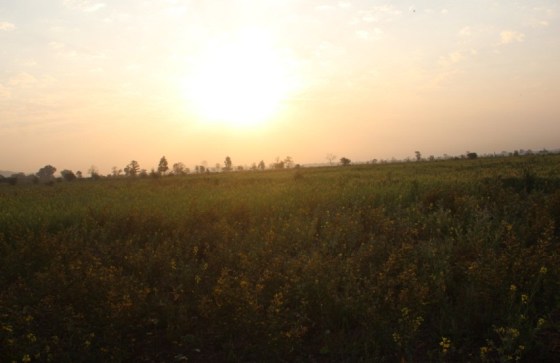
Sunrise behind the Tuar Dal Crop

Sunrise behind the Tuar Dal Crop

We have been constantly considering the question of “What to grow ! ” so that the soil improves and the damage done to the land over the years is healed. A lot of  ideas crossed us, all the way from green manure crops like gliricidia or daincha to laying the land fallow for sometime.

Somehow we decided to grow Tuar Dal (Pigeon Pea) in half of the farm. Sarso (Mustard) grew on it’s own at the onset of winter while we simply watched. It was only later we realized that how wonderful these two crops are. Anyone doing natural farming will find these two crops to be best of friends in the fields. Here is why –

Tuar Dal (Pigeon Pea)

  • Tuar Dal adapts to wide range of variations in rains and weather. On one side it can withstand some level of water logging, on other side it is drought resistant.
  • Tuar dal is one of the best medicine for the wound of “tilling”  on the farms. As it is an 8 months crop, it reduces the need for tilling to half. Secondly, it’s root go deep have the capacity to break the tillage pan. (hardened layer formed due to continuous tilling)
  • It is a fantastic green manure crop. During the vibrant vegetative growth , it sheds a large amount of flowers and leaves.
  • It tastes fantastic ! Eat it raw , make curries out of its green pods or make your favorite Dal tadka after it has dried up. In some places people eat it’s leaves too !

    tuar dal_Madmansfarm

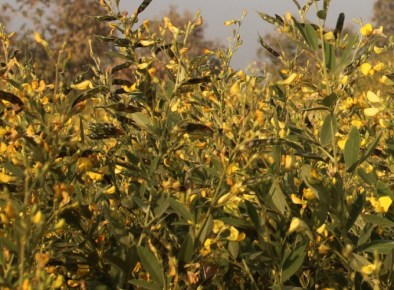
    Tuar Dal plant grows tall and deep , sheds lots of flowers and leaves, invites birds and butterflies !

  • It is a very good source of protein and many other nutrients.
  • Tuar dal serves as great fodder and bee forage. It also attracts butterflies.
  • Once sown, Tuar dal can be harvested upto 5 years if care is taken.

Sarso (Mustard Seed) 

  • Sarso grows on it’s own once as it’s seed can stay in soil for years and come alive when the time is right. So, we just need to sow it once.
  • It’s roots also penetrate deep into soil improving soil structure.
  • It’s a medicinal plant having multiple uses. (leaves, seeds both ! )
  • sarso_madmansfarm

    Sarso Sprouting on its own…is a strong and useful crop

    Sarso Da Sag, the traditional curry eaten in winters is both healthy and yummy.

  • It’s smell keeps a lot of pests and insects away, so it makes perfect crop for inter-cropping with other crops.
  • Cows love the leaves too !
  • Requires no support from farmer – it is irrigated naturally and require very little water, there are hardly any disease that catch sarso. (Few common pests like Maho sometimes affects sarso, which is cured mostly by casual spray of ash ! )

Note : Please remember that these points have come from our experience at the Madman’s farm in Central India (MP), therefore these crops may have some different behavior in different climate and location.

2

Towards “cide” free Farming (No-Kill farming)

When we learn that chemical pesticides cause cancer and harm nature, we decide to go “organic” or “natural”. Instead of using Endosulfan, we make our own pesticide from Neem, Custard Apple Seeds or Carnea leaves.

Here, we take a pause and think. How different is chemical pesticide from so called organic or natural pesticides ? Fundamentally, they both kill or distract pests and interfere in the natural order. This exposes further questions –

1.) Why do pests and insects affect our crops in first place ? Do they have a natural place in this cycle ? Are they necessarily causing negative affect to our agriculture ?

2.) How come some crops are more affected while others are almost unaffected ?

3.) Are all pests / insects harmful ?

4.) Are we disturbing natural order if we kill these pests and insects ?

During one of the discussions with Shri. Deepak Suchde of Natueco Farming, he mentioned something very unusual and interesting thought about insects and plant relationship.

“Insect attack only the crop/fruit that nature doesn’t seem fit for human consumption. It is nature’s way of warning you against eating those substandard fruits or crop. A healthy crop in healthy soil which is suited for human consumption, will not attract insects in first place. ”  – Deepak Suchde

Though this thought needs to be tested in field and time but it certainly provides a very different take on entire plant – pest relationship. cide free

Ahimsa (non-violence) forms a very integral part of spiritual life. Thus, as far was spiritual farming is concerned, it must adhere to Ahimsa. This means, no intentional killing of any insect.

Perhaps, these figments of imaginations and random musings are beginning of “cide” free farming. We , at the Madman’s Farm are now experimenting with farming that doesn’t kill anything simply for our personal interest. Instead, we are trying to grow crops that do not invite insects. If it does, we learn to let go of our share of crop to those insects.

Insects form an integral part of farm, they must have equal rights to live and eat. Nature always maintains a balance between crop production and insect population provided we do not disturb the balance in first place. Here are some essential aspects of No-Kill Farming : –

  • Wrong timing and wrong crops as per soil make plants susceptible to pest attack, so Grow right crop at right time
  • Growing same crop in the same field for longer time, makes it week, foster pest growth and reduce natural diversity. Ensure proper crop rotation.
  • Having one crop for many acres is unnatural in first place, this will inevitably attract pest. Grow diverse plants in your farm with inter-mixing.
  • Give enough food for local insects by growing marigold and other sacrificial crops.
  • A lot of insects are good and often very important for crop cycle, do not kill insects they are good too. 
  • If inspite of all our theorizing and practices, pests do attack the plant – learn to let go a part of your crop.
  • Use local seeds
  • Chemical fertilizers accelerate growth which makes the crop susceptible to diseases and pests, allow balanced growth for the plants

This is the beginning , whether this no-kill farming is possible or not -we will have to wait , learn, experiment and find out.


0

To Till or Not to Till

One of the question that has been hauting us for long was – whether to till or not to till ! There is rampant confusion about this question in farming, science and even the organic farming communities.

Creation of hardened soil layer due to tilling

Creation of hardened soil layer due to tilling (from eorganic.info)

On one side

  • Tilling is unnatural
  • It disturbs soil structure
  • It requires use of tractors and heavy machinery which create a tillage pan (a hardened soil layer) posing various issues
  • There are no clear scientific evidences or reasons for use of tilling
  • It harms microbes and biological life in the soil
  • It is believed to be harmful to environment

On the other hand

  • Tilling is used widely as a method for soil preparation
  • It is one (often only one) of the effective method of weed control in modern farming
  • It loosens the top soil which help in initial growth of plant
  • It prepares bed for sowing

The more we dig both the sides, the more evidences we gather for each argument. So, what do we do ?

Tilling is unnatural – there is no doubt about it. It harms soil and it’s culture. But one thing that makes it neccessary evil is “weed control”. There are other methods such as “cover crops” , mulching to control weeds. While these methods are more nature friendly, they often become difficult if not impractical as we move beyond few acerage.

So currently, here is our approach –

  • Use till – but make it as harmless as we can. (Use of lighter machinery, reduce number of tillings, do it at the right time)
  • Carry out healing practices to undo the harm of tilling (leaving the land untilled for few years, grow crops that break the tillage pan (like tuar dal), grow trees to loosen the soil, add green manure and improve soil culture)
  • Slowly adapt to no till by experimenting and learning from the farm

This question still remains with us but our current approach has allowed us to take easy as well nature friendly path.  We keep looking forward to more insights (practical ones especially) on this. Please share with us if you’ve got some ideas.